
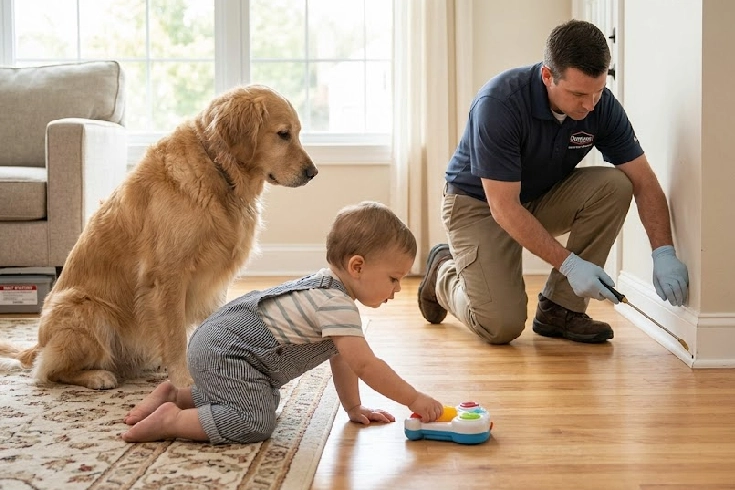
Babies, toddlers, and pets experience your home differently than you do. They spend most of their time on the floor, regularly touch baseboards, and have a habit of putting their hands or paws directly into their mouths. When a pest issue arises, eradicating the infestation is a strict health requirement. However, the methods you use to clear out insects or rodents introduce their own set of variables to your home environment.
Determining the safest path forward requires looking past marketing labels. The core issue is not simply what compounds are being used, but how they are applied, where they rest, and how vulnerable members of your household interact with them.
The Crucial Need for Safe Pest Control for Kids and Pets
Children and animals are disproportionately affected by environmental toxins. A child’s respiratory rate is faster than an adult’s, meaning they inhale a higher volume of air relative to their body weight. Their metabolic pathways are also still developing, making it harder for their bodies to process and eliminate foreign substances.
Pets face similar vulnerabilities, compounded by their grooming habits. A cat or dog walking across a recently treated floor will inevitably ingest residual chemicals when they clean their paws. Ensuring your residential treatments prioritize their physiology is critical. You can learn more about how we establish these baseline protections in our guide [Internal Link: About Our Mission/Safety Standards]. Taking a rigid, safety-first approach to pest management prevents accidental exposure while effectively managing the target infestation.
DIY Pest Control: Is It Truly Worth the Risk?
The DIY approach is often the first response to a pest sighting. Hardware stores stock aisles full of sprays, baits, and foggers, all promising quick results. While handling the problem yourself might seem cost-effective, it introduces significant exposure risks if the applicator lacks a basic understanding of chemical drift, residual life, and targeted placement.
The Appeal and Limitations of Natural DIY Pest Control for Pets
Many homeowners turn to pantry staples—like vinegar, baking soda, or citrus extracts—assuming natural means safe. These mixtures carry an obvious appeal because they are completely non-toxic to humans.
However, natural DIY remedies usually fail against established infestations. They might repel a few ants from a windowsill, but they will not eliminate a colony within your wall void. More importantly, natural does not always equal pet-safe. Certain essential oils, like tea tree or peppermint, are heavily toxic to cats and dogs when inhaled or absorbed through the skin.
Hidden Dangers in Over-the-Counter Products
When natural remedies fail, homeowners often upgrade to over-the-counter (OTC) chemical sprays. The danger here lies in application error.
Without professional training, individuals tend to over-apply pesticides. They might broadcast spray across wide swaths of baseboards or use total-release foggers (“bug bombs”) that coat every surface in the room, including children’s toys and pet bedding. OTC products often require strict adherence to label directions regarding ventilation and re-entry times, which are frequently misread or ignored by the average consumer.
Professional Pest Control: Which is Best for Your Family?
A licensed technician approaches a property with a completely different operational mindset than a homeowner with a spray can. Professional pest management relies heavily on inspection, exclusion, and highly targeted applications that isolate the active ingredients from the living spaces your family occupies.
Professional Pest Control Pet Safety Protocols Explained
Modern professionals utilize formulations that are physically inaccessible to pets. Instead of spraying liquid chemicals along open floors, a technician might apply gel baits inside crevices, inject dust into wall voids, or secure rodenticides inside tamper-proof bait stations that dogs cannot break open.
When liquid applications are necessary, technicians use micro-encapsulated formulas. These solutions dry rapidly, binding firmly to the surface so they do not transfer to a passing pet’s fur. We detail these exact methodologies in [Internal Link: Our Professional Pest Control Services] to ensure clients understand how risk mitigation is engineered into every visit.
The Truth Unveiled: Are Pest Control Chemicals Safe for Babies?
The word “safe” is often misused in this industry. A more accurate phrase is “reduced risk.” Under EPA guidelines, professional-grade products used indoors are formulated to pose minimal risk when applied strictly according to the label.
Because professionals use crack-and-crevice treatments rather than broadcast sprays, the chemical never touches the surfaces where babies crawl or play. The application dries quickly, leaving a targeted residual that only affects pests with specific nervous system receptors, remaining completely isolated from the infant’s environment.
Professional vs DIY Pest Control Safety: Pros, Cons, and Costs
Understanding the structural differences between these two approaches helps clarify the real cost of household safety.
| Feature | DIY Pest Control | Professional Pest Control |
|---|---|---|
| Application Method | Often broadcast spraying or open baiting | Targeted crack, crevice, and void treatments |
| Exposure Risk | High (due to frequent misapplication and over-use) | Low (isolated placement away from living areas) |
| Product Potency | Broad-spectrum, repels multiple bugs but rarely eradicates | Highly specific formulas targeting the exact pest biology |
| Upfront Cost | Low ($20 – $50 for sprays/traps) | Moderate to High ($150 – $300+ per treatment) |
| Long-Term Cost | High (frequent re-purchases, property damage from pests) | Low (treatments last longer, prevents structural damage) |
Assessing Non Toxic Pest Control for Homes: What Actually Works?
True non-toxic pest control relies on mechanical alterations rather than chemical applications. Sealing foundation cracks with silicone caulk, installing tight-fitting door sweeps, and repairing torn window screens are highly effective, permanent solutions. Pheromone traps and mechanical catch-traps also fall into this category, offering zero risk to children and pets while actively reducing pest populations.
The Rise of Eco Friendly Pest Control for Families
Integrated Pest Management (IPM) has become the gold standard for environmentally conscious households. IPM minimizes chemical use by focusing first on sanitation, habitat modification, and physical exclusion. When products are needed, the preference shifts to botanical-based insecticides or biological controls that break down rapidly in the environment. You can explore these specific options via our [Internal Link: Eco-Friendly/Green Pest Control Solutions] page.
Is Pest Control Safe for Dogs and Indoor Cats? What You Need to Know
A major consideration in household safety is the biological difference between canine and feline systems. Dogs are robust but naturally curious, meaning they are likely to sniff or chew on bait stations. Relying on professional-grade, tamper-resistant equipment is non-negotiable for dog owners.
Cats require an entirely different level of precaution. Felines lack a specific liver enzyme (glucuronosyltransferase) needed to process certain compounds. Pyrethrins and permethrins—common ingredients in both OTC and some professional insect sprays—are highly toxic to cats. A technician aware of cats in the home will bypass these chemicals entirely, opting for alternate active ingredients or strict mechanical exclusions to ensure feline safety.
Essential Steps to Guarantee Child Safe Pest Control
Even with a highly trained professional executing the treatment, household safety remains a collaborative effort. Preparing the environment properly mitigates the final percentage points of risk.
| Treatment Phase | Required Action Items for Homeowners |
|---|---|
| Pre-Treatment | Pick up all children’s toys, clothing, and blankets from the floor. |
| Pre-Treatment | Move pet food bowls, water dishes, and chew toys to a secure cabinet. |
| Pre-Treatment | Cover fish tanks tightly and turn off the air pump to prevent vapor intake. |
| Post-Treatment | Keep pets and children out of the treated area until fully dry (typically 2-4 hours). |
| Post-Treatment | Open windows to maximize ventilation before allowing vulnerable family members back inside. |
Pre-Treatment Safety Checklist for Parents and Pet Owners
Before treating any room, clear the floor space. Remove all stray items, particularly porous materials like plush toys or pet beds, as these can absorb airborne droplets. Ensure that pantry doors are closed and all loose food items are sealed in airtight containers. If you have reptiles or birds, inform your technician immediately; these animals possess extremely sensitive respiratory systems and often require removal from the home during treatment.
Post-Treatment Protocol: When is it Safe to Let Kids and Pets Play?
The absolute rule of pest control safety is allowing the product to dry completely. A liquid formulation is only capable of transferring to skin or fur while it remains wet. Depending on your home’s humidity and airflow, this process usually takes between two to four hours. Once the product has dried and bonded to the surface, the risk of dermal transfer drops to near zero, making the room safe for regular household activity.
Frequently Asked Questions
Integrated Pest Management (IPM) is the safest and most reliable method. It focuses heavily on mechanical exclusion—such as sealing cracks, fixing leaks, and removing food sources—before utilizing highly targeted, low-toxicity gel baits or dusts in areas pets cannot reach.
For standard liquid applications, the general recommendation is to stay out of the treated area for 2 to 4 hours. The specific timeline depends on the product used and indoor ventilation. Always wait until the applied solution is 100% dry before allowing children or pets to walk on treated surfaces.
No. While botanical sprays are natural, they are not universally pet-safe. Cats are highly sensitive to essential oils like peppermint, tea tree, eucalyptus, and citrus. Inhaling or ingesting these oils can cause severe neurological and liver issues in felines.
Yes. Over-the-counter aerosol sprays and total-release foggers leave airborne particulates that can linger in poorly ventilated rooms. Inhaling these chemicals can trigger asthma attacks, coughing, and respiratory irritation in children with developing or sensitive lungs.
Conclusion: Making the Safest Choice for Your Home
Navigating pest control with children and animals in the house requires strict attention to detail and a refusal to cut corners. While DIY methods offer a quick feeling of action, they frequently fall short on both efficacy and safety due to application errors. Relying on professional expertise ensures that the compounds used are specifically matched to your pest issue and applied in ways that keep them out of reach of curious hands and paws. If you are dealing with an active infestation and want to prioritize your family’s health, reach out to review your options [Internal Link: Contact Us / Request a Consultation]. Effective eradication and household safety are entirely achievable when the right protocols are put into practice.